
Basement water can involve rainfall, drainage around the property, water collecting near the foundation, below-grade walls or openings, cracks or joints, and the way water is collected or removed once it reaches the structure. The relevant cause or combination of conditions depends on the property.
Basement Waterproofing
Basement Waterproofing Starts With Understanding Where the Water Is Coming From.
Water entering a basement can show up as seepage, recurring dampness, moisture along walls or floors, or water after heavy rain. The right response depends on how that water is reaching the space, what conditions surround the foundation, and which parts of the property actually need to be addressed.
Have photos? Include them with your request.
Start With What You’re Seeing
What Are Common Signs of Basement Water Intrusion or Moisture?
Where the water appears, when it appears, and whether the condition keeps returning can help frame the next conversation. The visible symptom still does not determine the cause by itself.
01
Visible Water or Seepage
Water appearing through or along basement walls, floors, joints, openings, or other below-grade areas.
02
Damp Basement Walls or Floors
Persistent dampness even when standing water is not present.
03
Water After Rain
Moisture or water that becomes noticeable during or following rainfall.
04
Recurring Water Entry
A condition that repeatedly appears in the same area or under similar circumstances.
05
Moisture Staining or Surface Changes
Visible changes to basement surfaces that may indicate recurring moisture exposure.
06
Water Near Cracks or Openings
Water appearing around cracks, penetrations, joints, or other openings can deserve evaluation without establishing why the crack or opening exists.

Follow the Water
The Wet Area May Be Where the Problem Becomes Visible—not Where It Begins.
Basement water can involve several connected conditions. Rainfall, drainage around the property, water collecting near the foundation, below-grade walls and openings, cracks or joints, and the way collected water is managed can all be relevant depending on the property.
01 — Outside the Basement
How Is Water Reaching the Building?
Potential conditions can include:
Rainfall
Drainage around the property
Water collecting near the foundation
Exterior water-management conditions
Exterior Drainage Solutions / French Drains may be relevant depending on the property.
02 — At the Below-Grade Building Boundary
Where Can Water Affect or Enter the Structure?
Relevant areas may include:
Foundation walls
Wall / floor relationships
Cracks
Joints
Openings / penetrations
Other identified water-entry conditions
A crack may provide a water path without establishing a structural diagnosis.
03 — Inside the Basement
What Happens Once Water Reaches the Space?
Depending on the condition, the project may need to consider:
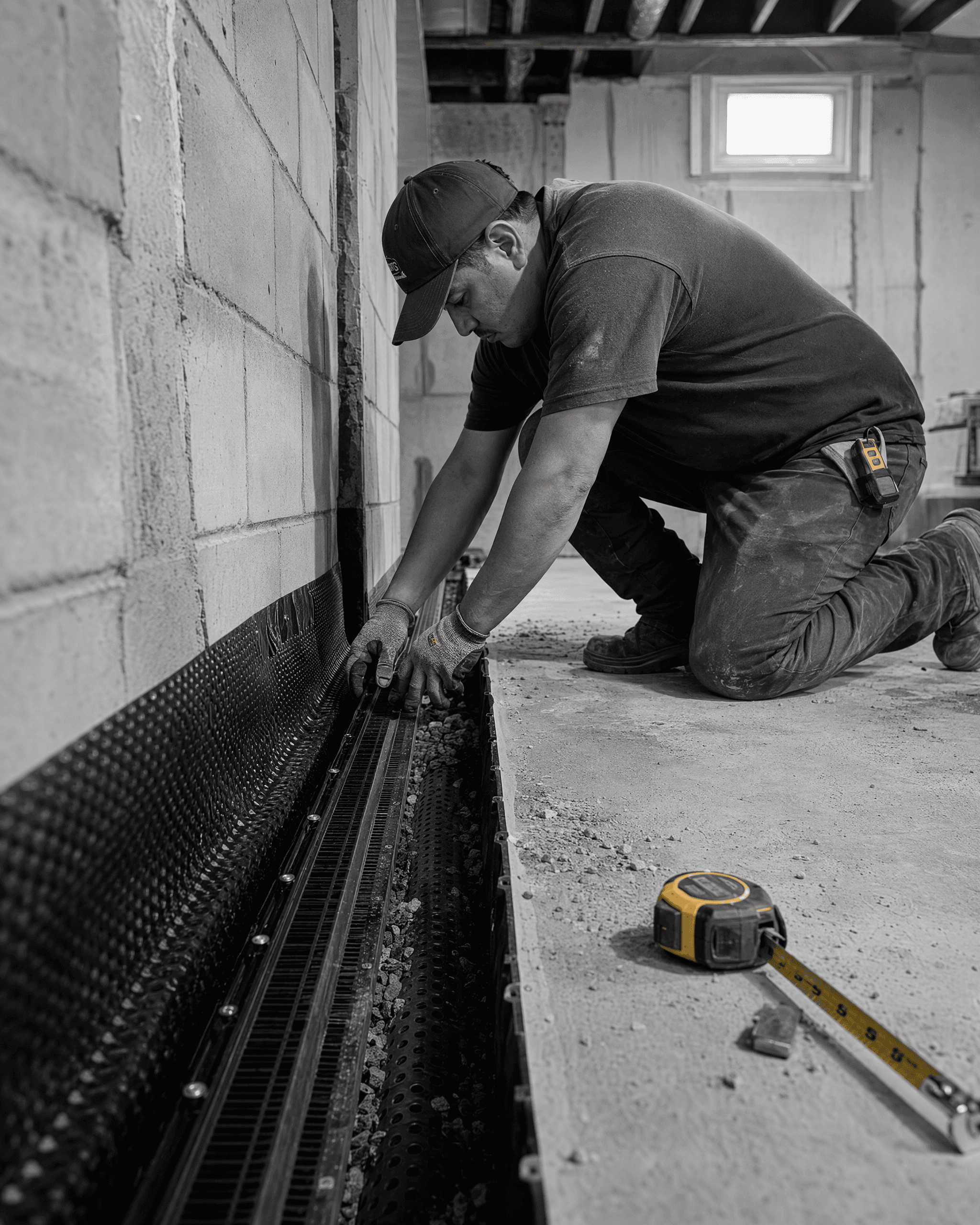
Water collection
Drainage
Removal
Moisture management
Repair of identified water-entry areas
Sump Pump Installation / Moisture Protection / Water Intrusion Repair may be relevant where the condition supports them.
Understand the water path before choosing the waterproofing response.
The Waterproofing Scope
The Work Should Match How the Water Is Affecting the Basement.
Basement waterproofing is not one universal treatment. Depending on the property, the work may involve one condition or several connected water-management needs.
01
Water-Entry Repair
Repair work may address identified areas or conditions through which water is entering the basement.
02
Interior Water Collection / Removal
Where water needs to be collected and moved away from the structure, sump-pump or related water-management work may become relevant.
03
Drainage Paths
French drains or other appropriate drainage work may be used where collecting and redirecting water is part of the solution.
04
Exterior Water Management
Exterior drainage conditions may need to be addressed where the way water reaches or collects around the property contributes to the basement problem.
05
Moisture Protection
Persistent moisture conditions may require measures intended to better manage moisture within vulnerable areas.
These are approved Waterproofing Services capabilities—not a checklist of work required on every Basement Waterproofing project.
Inside. Outside. Sometimes Both.
The Appropriate Water-Management Work Depends on the Path the Water Is Taking.
No. Basement waterproofing does not automatically mean an interior-only treatment. Depending on the condition, the relevant work may involve drainage outside the structure, the below-grade building boundary, water-management components inside the basement, or a combination of connected measures.
Exterior Conditions
How water approaches, drains around, or collects near the property may need attention.
Building-Entry Conditions
Identified cracks, joints, openings, wall / floor conditions, or other entry areas may need appropriate repair or protection.
Interior Management
Where water reaches the basement, collection, drainage, removal, and moisture-management work may be relevant.
The Larger Property
Basement Water and Foundation Problems Can Intersect Without Being the Same Problem.
Water near a foundation does not automatically mean the foundation is failing. Likewise, a foundation crack does not automatically mean waterproofing is the correct structural response. When water conditions appear alongside movement, bowing, settlement, uneven structural conditions, or other foundation concerns, the structural condition deserves its own appropriate evaluation.
Beyond the Wet Area
A Better-Managed Basement Creates a Better Starting Point for the Property.
The purpose of waterproofing is not simply to make a visible wet spot disappear. Appropriate water-management work should address the relevant condition and help create a more usable, manageable below-grade environment for whatever the property needs next.
01
A Clearer Water-Management Condition
The work is defined around the actual water problem rather than a generic treatment.
02
A More Usable Lower Level
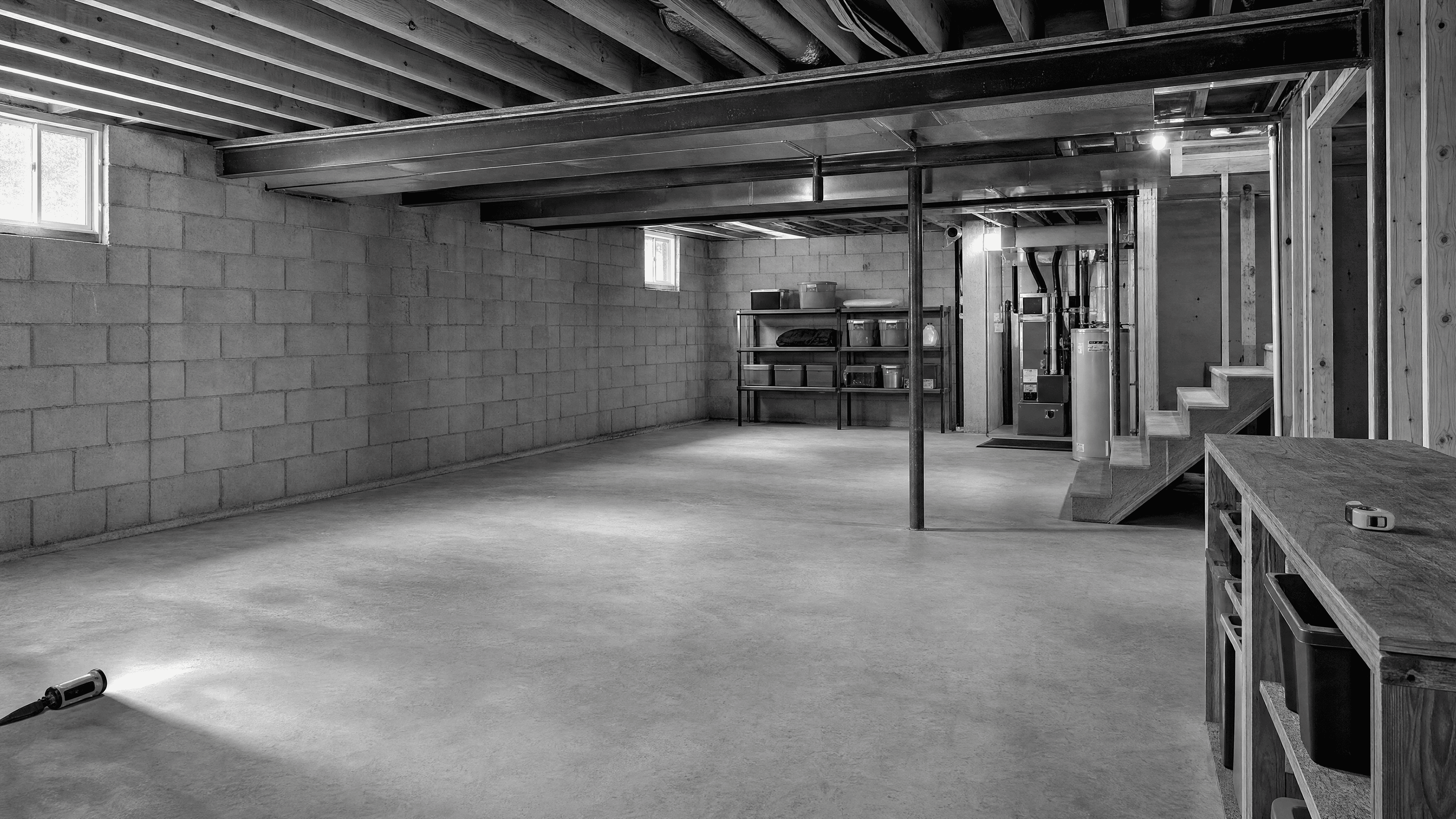
Water and persistent moisture conditions should be understood before major improvements are planned for the space.
03
Better Context for the Larger Property
Foundation, drainage, structural, and renovation decisions can be considered more intelligently when the basement water condition is understood.
Basement Waterproofing Questions
Common Questions About Basement Waterproofing.
You do not need to diagnose the property yourself. Start by sharing what you are seeing, include photos if useful, and request a free estimate so the appropriate next step can be considered.
Water in the Basement?
Show Us What You’re Seeing. Start With the Property.
Tell Builders of Kentucky where the water or moisture is appearing, when you notice it, and anything you already know about the property. You do not need to determine the waterproofing solution before starting the conversation.