

Yes. Fix & Flip Renovations is the dedicated Builders of Kentucky service for investment properties that require a coordinated renovation scope before their intended next use or market position. The actual work depends on the property and may involve multiple rooms, systems, trades, or construction categories where appropriate.
Fix & Flip Renovations
Renovate the Property Around What It Actually Needs.
A Fix & Flip renovation can involve far more than finishes. Builders of Kentucky helps investors look at the property as one connected construction project—identifying what needs attention, organizing the renovation scope, prioritizing the work, and coordinating the construction required to move the property toward its intended next use or market position.
Explore Investor Services
Start With the Property
What Are You Working With—and What Does the Property Need to Become?
An investment-property renovation can begin at different points. You may already control the property, be evaluating the construction scope, or have a renovation plan that needs to be tested against the conditions that actually exist. Start with the property and the intended outcome before treating the project as a list of rooms and finishes.
01
Evaluating the Renovation
You know the property needs work, but the construction scope is not yet clear.
Relevant parent capability: Property Evaluations / Scope Development
02
Prioritizing an Existing Scope
You already have a list of planned improvements and need to understand what should take priority, what connects, and what may be missing.
Relevant parent capability: Scope Development / Construction Consulting
03
Coordinating a Broader Renovation
The property requires several rooms, systems, trades, or exterior/interior scopes to be handled as one construction project.
Relevant parent capability: Complete Renovations / Fix & Flip Renovations
04
Ready to Move Toward Construction
The renovation direction is sufficiently defined to discuss execution, sequencing, and the next construction step.
Primary route: Request an Investor Consultation
You do not need to know every trade, material, or construction answer before beginning the conversation.
Request an Investor Consultation
Parent capabilities are part of the broader Investor Services pathway.
Explore Investor Services
Property First
The Property Should Define the Scope.
It is easy to enter a Fix & Flip project thinking first about kitchens, bathrooms, flooring, paint, fixtures, or exterior appearance. Those decisions may belong in the renovation—but they should not outrank construction conditions that can affect the function, sequence, or integrity of the larger project.
01 — Must-Address Construction Needs
Conditions involving structure, foundation, active water intrusion, roofing, exterior protection, unsafe or failed construction, or other material property concerns may need attention before cosmetic improvements make sense. Not every property has these conditions.
02 — Functional Renovation Needs
Layout, building systems, kitchens, bathrooms, windows, doors, circulation, interior reconstruction, or other functional work may belong in the scope depending on the property and intended renovation.
03 — Market-Relevant Improvements
Once required and functional work is understood, the renovation can consider which visible improvements appropriately support the property’s intended next use or market position. This is construction prioritization—not a promise of resale value or investment return.
04 — Finish-Level Decisions
Materials, fixtures, surfaces, trim, and finish quality should support the agreed scope and intended property position without allowing cosmetic choices to obscure more important construction needs.
Build the Scope
A Fix & Flip Scope Should Be More Than a Room-by-Room Checklist.
One property can contain several construction needs with different levels of urgency, dependency, visibility, and finish expectation. The useful scope is the one that organizes those needs around the property rather than treating every planned improvement as an equal, independent task.
Protect the Property
Address relevant structural, foundation, roofing, water-intrusion, exterior-envelope, or other material building conditions where they genuinely belong in the renovation.
Make the Property Function
Coordinate appropriate interior reconstruction, layout, kitchen, bathroom, utility-related, window/door, or other functional renovation work supported by the actual scope.
Resolve Connected Property Work
Where concrete, masonry, exterior improvements, deck/outdoor conditions, or other property work affects the renovation, bring those relationships into the larger scope rather than leaving them disconnected.
Coordinate the Finish Level
Make finish decisions in relation to the property’s intended renovation position and the construction that supports them.
Protect the Sequence
Organize dependencies so later work does not unnecessarily conflict with, cover, damage, or require rework of earlier construction.
Coordinated Renovation
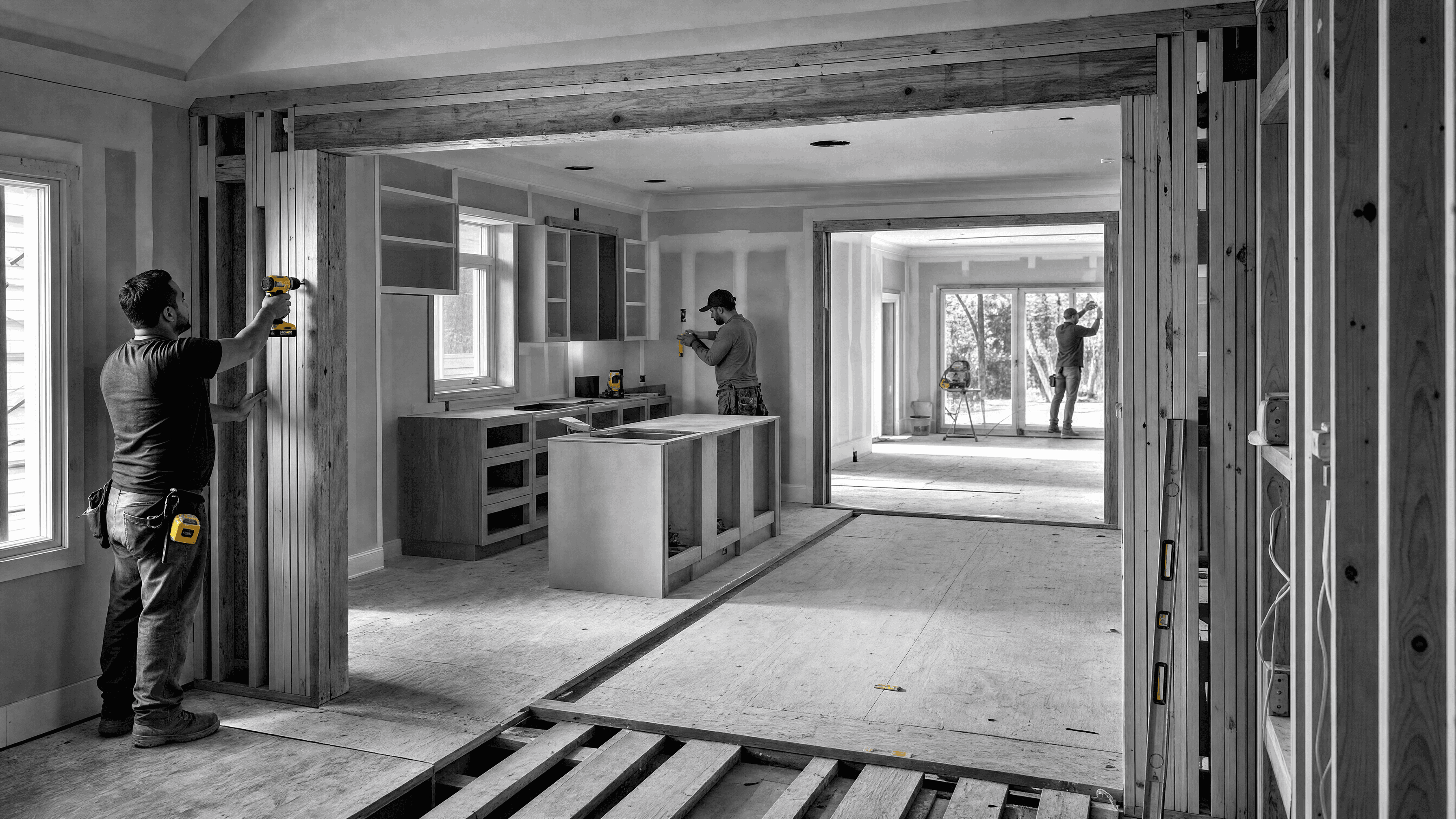
A Fix & Flip can cross room boundaries and service categories quickly. When structural work, water-related conditions, exterior construction, interior renovation, building systems, and finish work all touch the same property, the advantage is not simply having more trades—it is understanding how the work belongs together.
Condition
What does the property actually require before finish-level decisions can be trusted?
Dependencies
Which work must happen before other work can begin, close, or finish?
Disciplines
Which Builders construction categories genuinely belong in the renovation?
Sequence
How should related work be organized to reduce avoidable conflict and rework?
Execution
How does the defined scope move through coordinated construction rather than a collection of disconnected contractor visits?
See Our Process
Renovation Discipline
Move Efficiently Without Building the Project Backward.
Investor renovation decisions often involve tradeoffs. The goal is not to make every area the most expensive version of itself. It is to understand which work is necessary, which improvements support the project objective, which decisions depend on one another, and where shortcuts could create avoidable construction problems later.
01
Address What Can Undermine the Larger Project
Do not let cosmetic progress conceal structural, water-related, roofing, exterior, or other material conditions that genuinely belong in the scope.
02
Resolve High-Dependency Work Early
Where one construction decision affects several later trades or finishes, that relationship should be understood before dependent work advances.
03
Keep Finish Level Consistent With the Project
Coordinate visible materials and finish quality around the agreed renovation direction rather than overbuilding one area while leaving connected areas unresolved.
04
Avoid Unnecessary Rework
Sequence related construction so completed work is not unnecessarily disturbed by work that should reasonably have occurred earlier.
This section addresses scope discipline, dependencies, sequencing, and construction efficiency.
Explore Investor Services
Finish-Level Discipline
A Market-Facing Renovation Still Has to Be Built Well.
Once the larger property conditions and functional scope are resolved, visible construction matters. Flooring, cabinetry, tile, trim, fixtures, paint, hardware, transitions, and finish details should feel coherent and professionally executed without allowing one showcase area to become disconnected from the rest of the property.
Consistency
Materials and finish decisions should feel related across the property rather than like unrelated room upgrades.
Function
Visible improvements should work with the layout and construction beneath them.
Craftsmanship
Fit, alignment, transitions, installation, and finish quality remain important even when the project is investment-driven.
Scope Discipline
Finish work should support the defined renovation rather than distract from unresolved construction needs elsewhere.


The Finished Property
The Renovation Should Read as One Property—Not a Collection of Upgrades.
A well-coordinated Fix & Flip renovation should feel resolved across the areas included in the project. Construction needs have been addressed, functional work connects, materials and finishes relate, and the visible result reflects one deliberate renovation scope rather than a series of disconnected cosmetic decisions.
Resolved Construction
The completed visible work should align with the property conditions and scope that were actually addressed.
Consistent Finish Level
The renovated areas should feel intentional together rather than unevenly improved.
Property-Wide Coherence
Interior, exterior, structural, and finish work included in the project should read as parts of the same renovation.
Clear Next Position
The property should communicate a completed renovation direction appropriate to the agreed project objective—without Builders making a claim about resale price, appraisal, sale timing, or return.
Questions
Fix & Flip Renovation Questions
Ready to Talk About the Property?
Bring Us the Property. Start With What You Know.
Tell Builders of Kentucky what property you are working with, what you already know about the condition, what you are trying to accomplish with the renovation, and any scope or project information you already have. You do not need every construction decision resolved before beginning the conversation.